

|
Description
|
2024- 2025
|
Up To Date
|
|---|---|---|
Community Mobilization Against CEFM
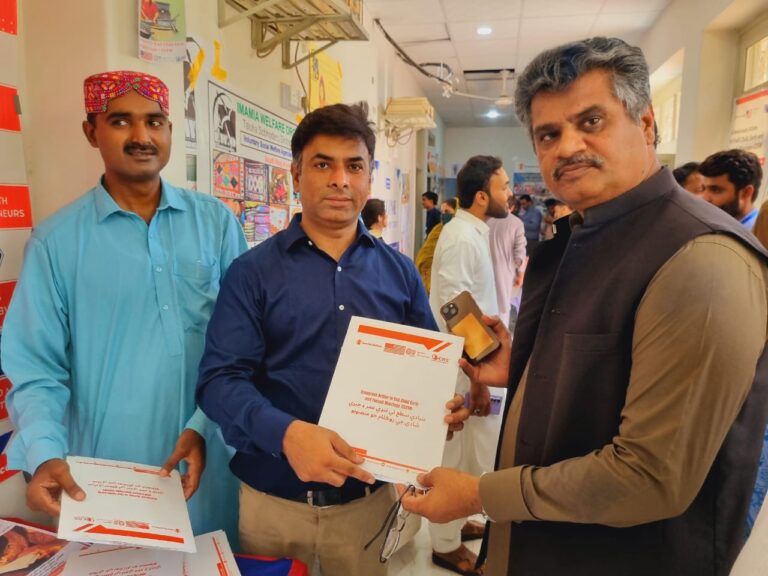
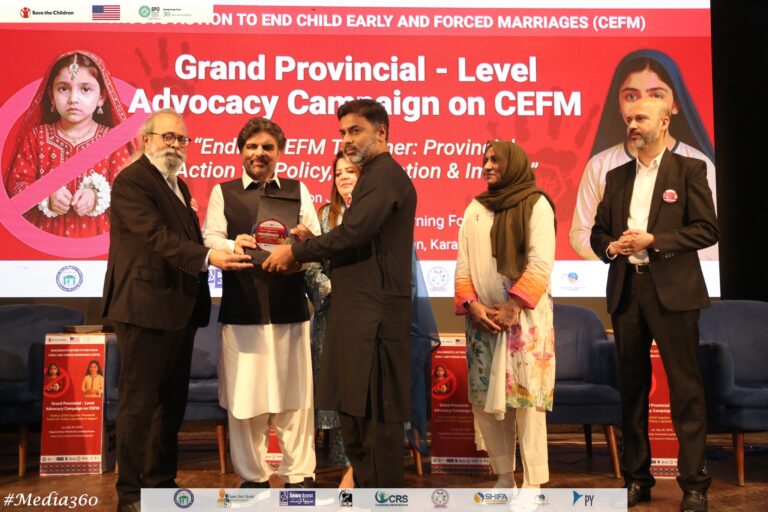
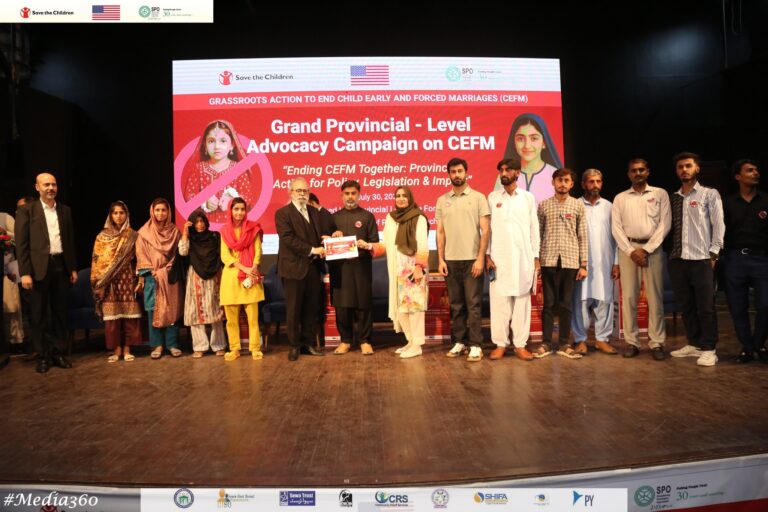
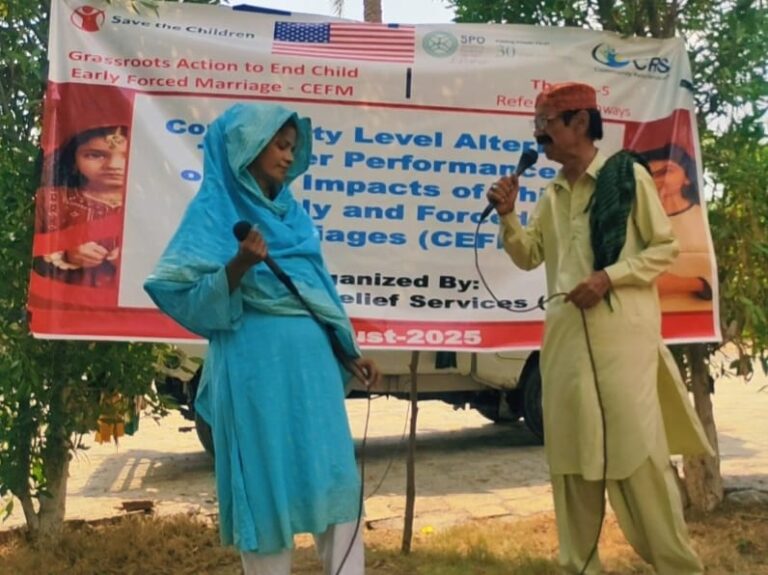
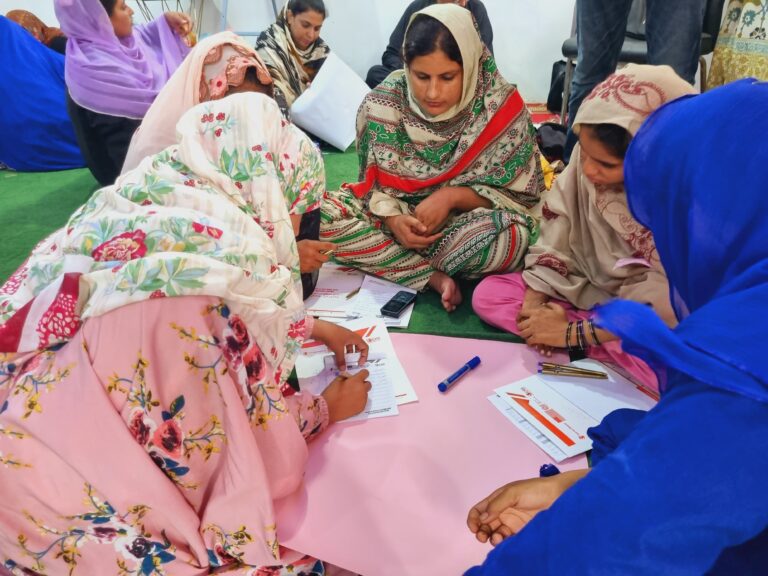
CRS works with local communities to raise awareness about the harms of child, early, and forced marriage, encouraging collective action to prevent the practice and promote child rights.
Survivor Support Services
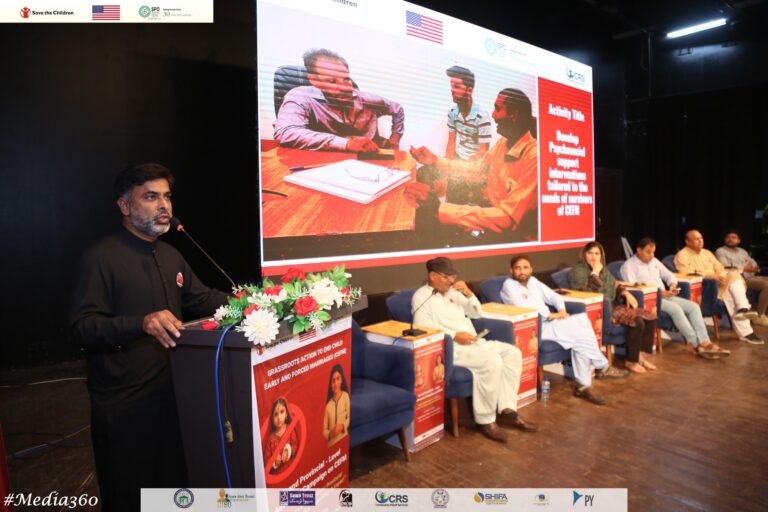
The project provides comprehensive support to survivors, including legal aid referrals, counseling, hotline services, and safe shelters, ensuring protection, reintegration, and rehabilitation.
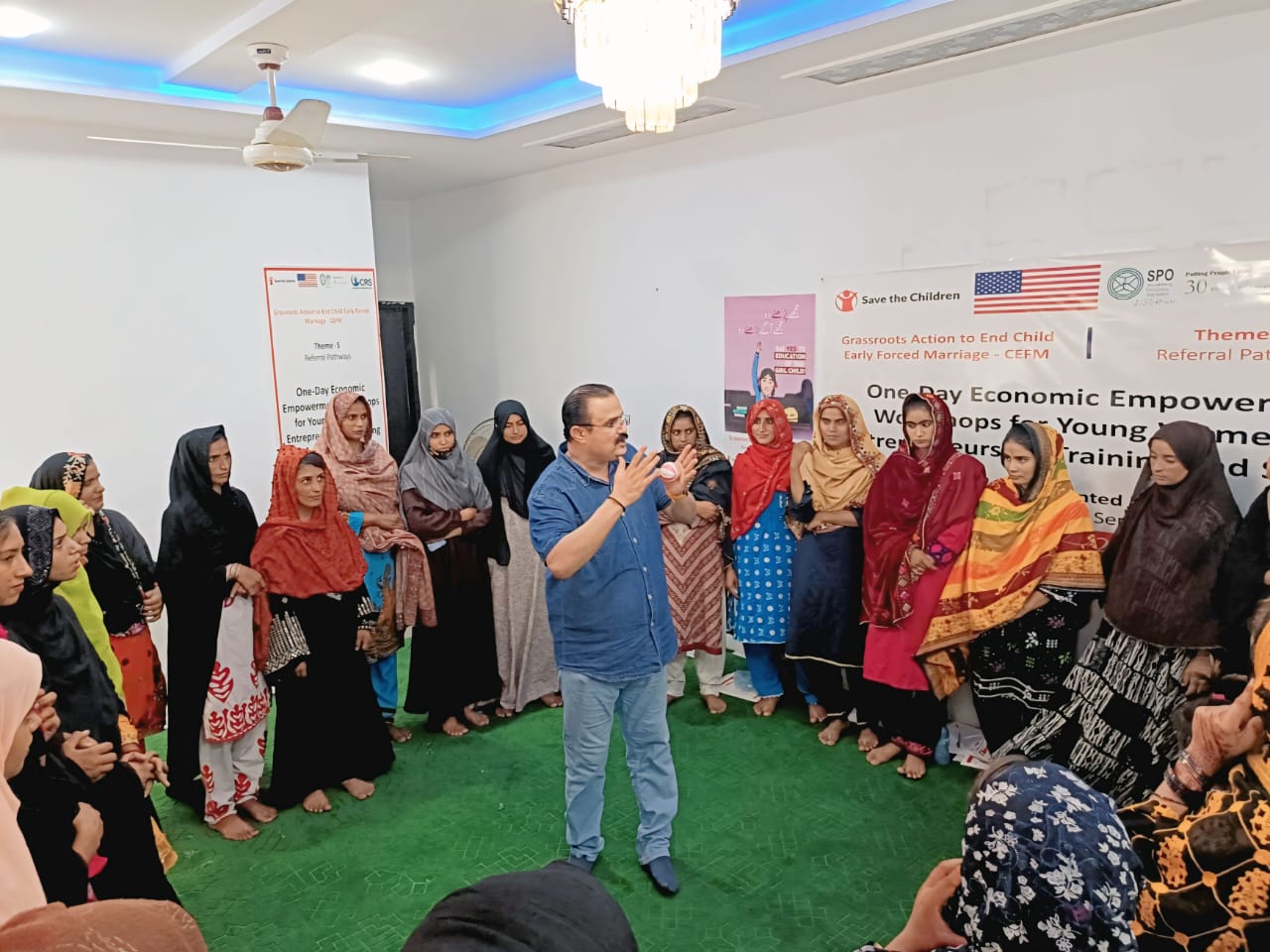
Strengthening Child Protection Systems
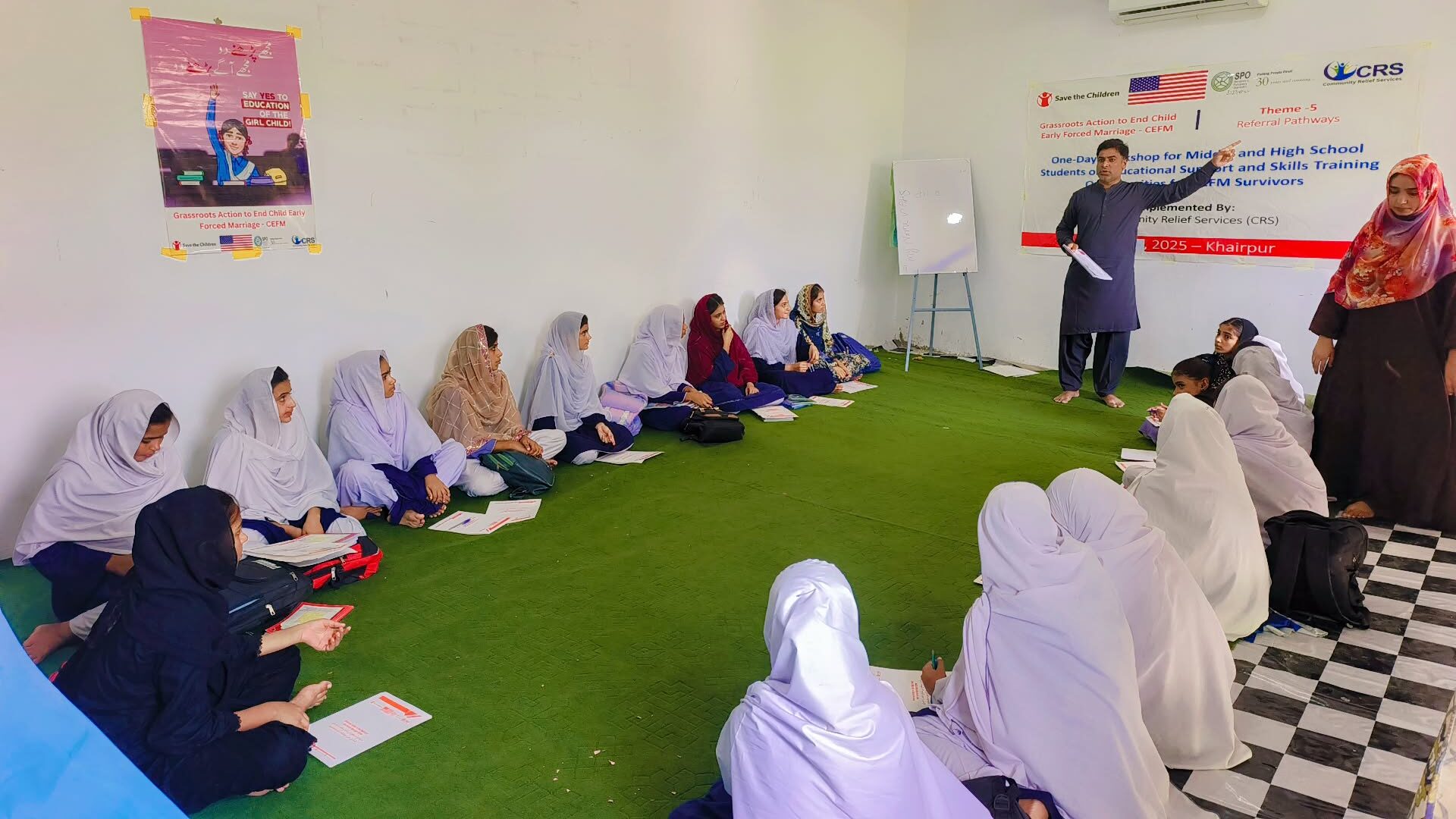
CRS strengthens district-level referral mechanisms, case management, and service delivery by assessing capacity gaps and linking stakeholders for a coordinated response to CEFM cases.
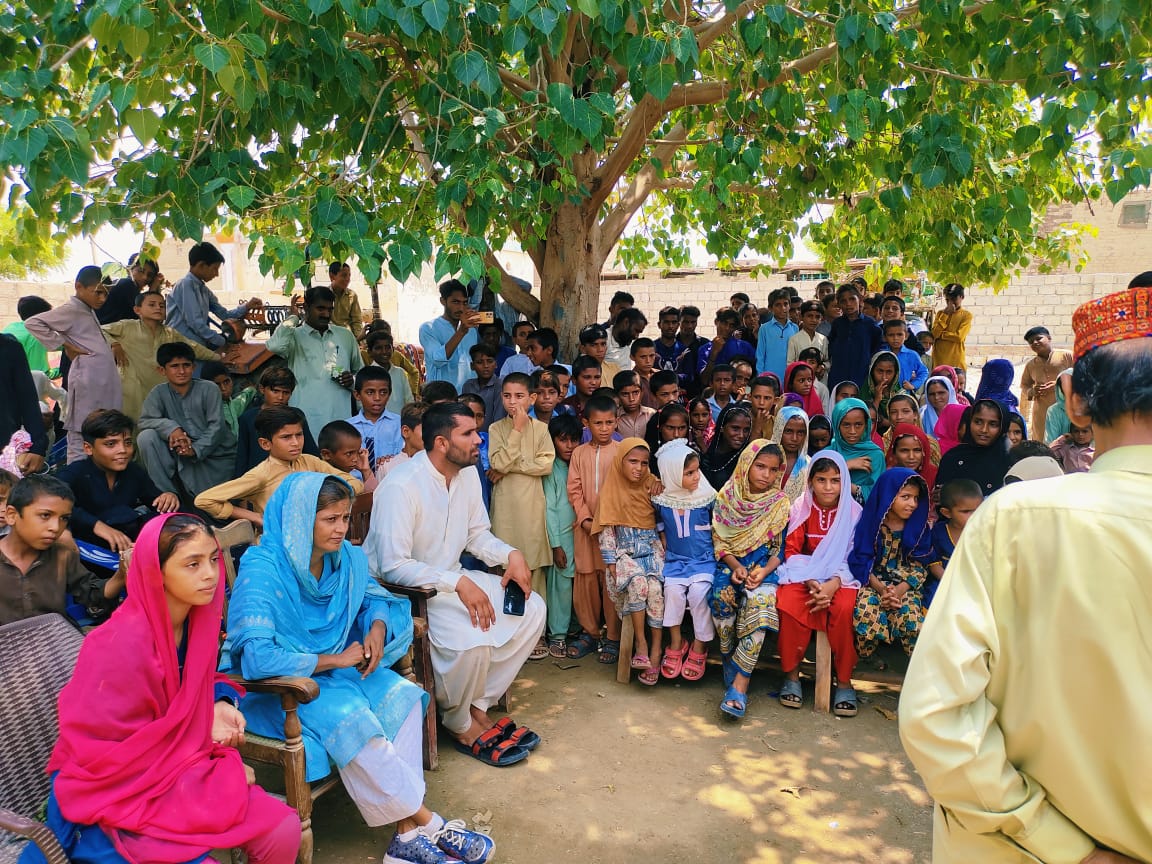
Promoting Local Leadership & Sustainability
By empowering local leaders and stakeholders, the project fosters ownership of prevention and response strategies, ensuring long-term impact and sustainability in tackling CEFM.
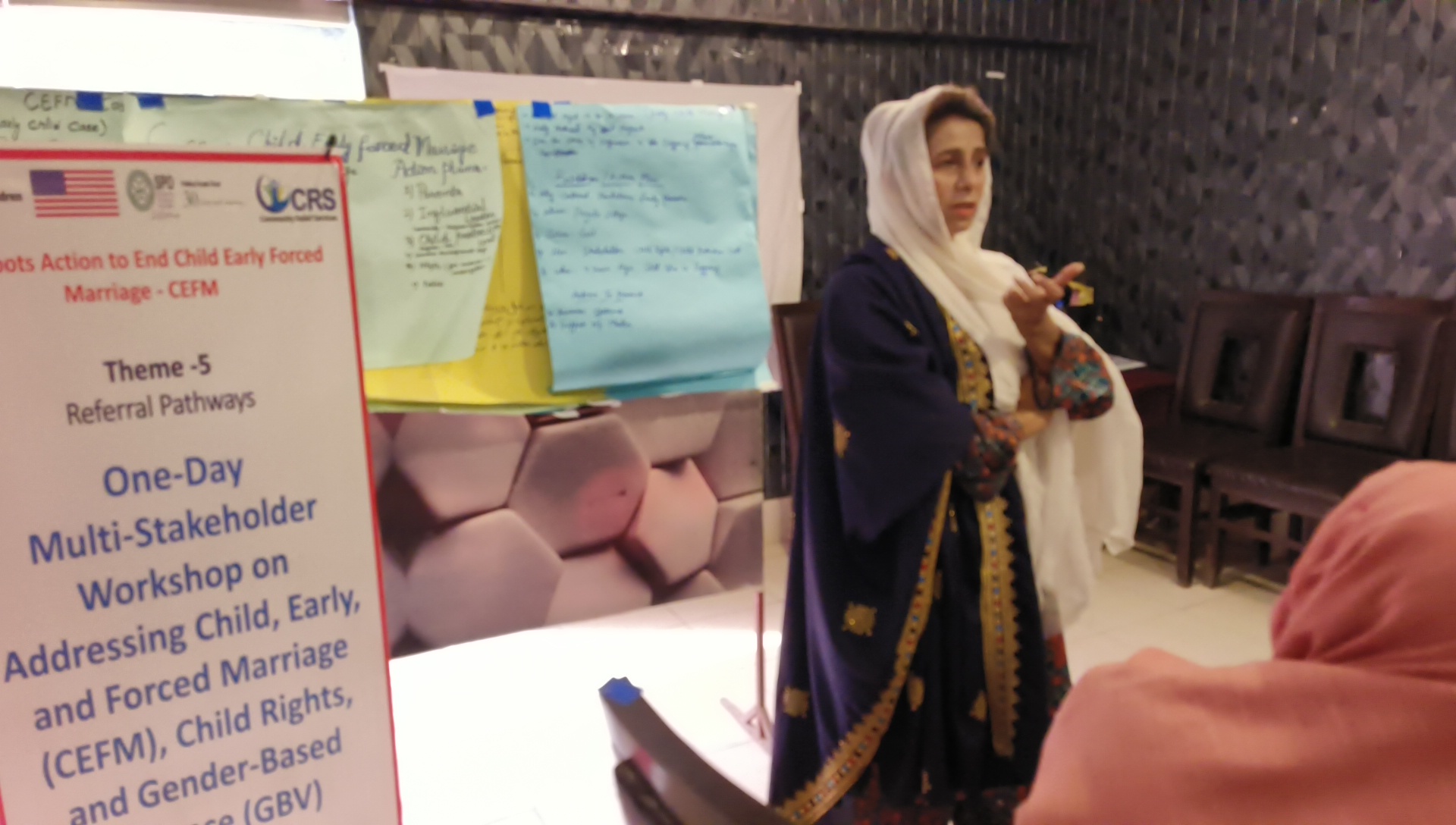
School Cluster Policy-A pilot project
The objective of the school clustering policy is to support the Sindh Education and Literacy Department is to smoothly implement thef School Clustering Policy and enhance the capacity of the relevant stakeholders to advance the level through field coaching so that new delegated powers can be exercised by the cluster schools’ head teachers and technical support to the government of Sindh, for scaling up the clustering policy execution and develop the monitoring and reporting system
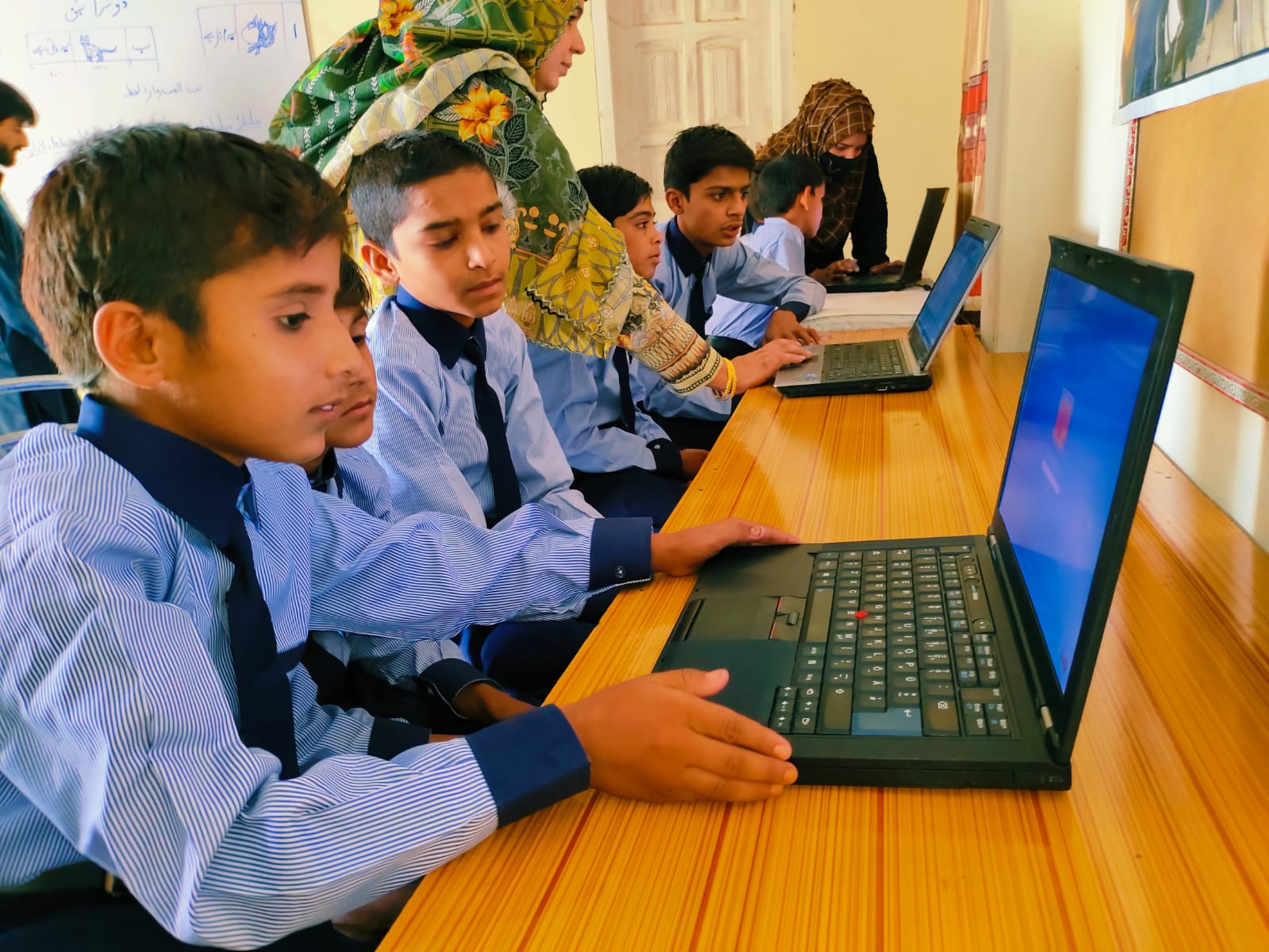
Child Safe Spaces
Child psychosocial well-being refers to the emotional, social, and psychological development of a child. It encompasses their ability to form relationships, express their feelings and navigate the world around them. A child’s psychosocial well-being is shaped by a variety of factors including genetics, environment, experiences and relationships with others. A positive and supportive environment, nurturing relationships with caregivers and opportunities for socialization and learning all contribute to a child’s psychosocial well-being. Conversely, adverse experiences such as neglect, abuse or trauma can negatively impact a child’s psychosocial development and lead to long-term consequences. It is important for caregivers, educators and mental health professionals to prioritize a child’s psychosocial well-being in order to promote their healthy development and overall well-being